
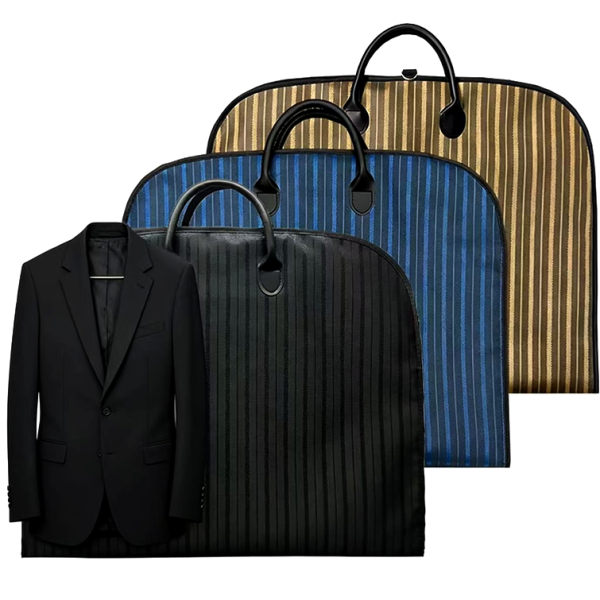
Ordering garment bags for clothes wholesale seems simple — until the supplier asks what material you want. Nylon? Non-woven? PEVA? Suddenly it’s a decision you didn’t prepare for. Pick wrong, and you end up with bags that tear at the seams or trap moisture against expensive garments.
Each material has a clear reason to exist. The trick is matching the right one to your brand, your price point, and what your customers actually do with the bag after they leave the store. Here’s how they compare.
Non-Woven — The Budget Choice for Garment Bags for Clothes Wholesale
If you’ve handled a clothing bag from a dry cleaner or a mid-range clothing store, it was probably non-woven. This material is the most popular choice for storage garment bags , and for good reason. It’s cheap. It lets air circulate. Shipping costs stay low because it weighs almost nothing.
That breathability is the headline feature. Air moves through the fibers naturally. Moisture doesn’t pool inside. For suits, coats, or dresses stored for weeks — especially in humid climates — that airflow keeps everything fresh. Dry cleaners run on non-woven for exactly this reason.
Where it falls short is feel. Non-woven has a slightly rough, paper-like texture. It doesn’t drape. It crinkles. And it tears more easily than woven fabrics — especially at the seams after repeated zipping and unzipping. For a $3,000 suit, the bag shouldn’t feel like it came free with the purchase.
Use non-woven when cost per unit is the priority. It works for fast-fashion brands, dry cleaners, subscription boxes, and any operation where the bag is a utility rather than a brand statement.
Nylon Woven — Stronger, Sharper, and Worth the Extra
Nylon feels different the moment you touch it. Smoother. Heavier. More intentional. For garment bags for clothes wholesale orders from premium brands, it’s usually the right pick.
Durability is where nylon pulls ahead. It resists tearing. It holds its shape. Most nylon clothing bags storage options come with a PU coating on the outside, which beads water instead of absorbing it. That matters when a customer carries a suit through rain or tosses the bag into a car trunk that isn’t perfectly dry.
Then there’s the branding advantage. Nylon takes screen printing, heat transfer, and embroidery — giving you more ways to apply a logo than non-woven or PEVA. A men clothes bag in black nylon with an embroidered logo doesn’t feel like packaging. It feels like part of the product. Customers keep it. They reuse it. That means your brand stays visible for months, not minutes.
The downside is cost. Nylon runs noticeably more per unit than non-woven. Across a few hundred bags, the gap is manageable. Across five thousand, it’s significant. If your average garment retails above $150, the math usually works. Below that, non-woven may be the more practical call.
PEVA — See-Through, Fully Waterproof, and a Bit Tricky
PEVA is the material that most buyers don’t know by name but recognize instantly. It’s the clear, slightly flexible plastic used for clothing bags where visibility matters. Unlike PVC, PEVA is non-toxic and chlorine-free — no chemical smell, no off-gassing onto clothes.
Its biggest advantage is obvious: you can see what’s inside. For retailers managing dense storage racks or customers juggling multiple storage garment bags in a shared closet, the ability to spot the right suit at a glance is genuinely useful. PEVA is also fully waterproof — unlike coated nylon or non-woven, liquid can’t seep through at all.
But PEVA has a trade-off that catches first-time buyers off guard. It doesn’t breathe. At all. For short trips and transport, that’s fine — the garment goes from point A to point B and comes out. But for long-term clothing bags storage , trapped humidity inside a sealed PEVA bag can yellow white fabrics and leave a stale smell. If your customers store suits for months, either add ventilation eyelets or choose a breathable material instead.
Logo options are also more limited on PEVA. Screen printing works. Embroidery doesn’t. Heat transfer results vary depending on the plastic formula. If branding is central to your bag strategy, factor that in early.
How to Decide — A Practical Framework
Instead of getting lost in specs, ask yourself three questions.
One, what’s your price point? Garments under $80 work fine with non-woven. Over $150, nylon starts pulling its weight. PEVA sits in the middle on cost but narrows your use cases because of the breathability issue.
Two, how do customers use the bag? If they toss it after getting home, material barely matters — go with the cheapest option that doesn’t embarrass you. But if they travel with it, store suits in it, or reuse it for years, nylon justifies the cost with durability alone.
Three, what’s your storage climate? Humid coastal areas or tropical shipping routes make breathability non-negotiable. That tilts toward non-woven or nylon with ventilation. Arid climates or short transit times make PEVA’s waterproofing a genuine advantage.
If you’re still split between two materials, order samples of each. Hang a suit inside. Check how the zipper feels. See how the logo looks under store lighting. A material that reads great on a spec sheet might feel wrong in your hands. Better to spend thirty dollars on samples than three thousand on a shipment you regret.
Ready to Order Wholesale Garment Bags?
At AngHanger , we produce garment bags for clothes wholesale in all three materials — non-woven, nylon, and PEVA. That means you’re not locked into one option before you even start. Choose your fabric, color, size, and logo method. We’ll ship samples first so you can compare them side by side.
We also manufacture matching hangers, suit covers, and packaging — one supplier for a consistent brand experience.
 English