
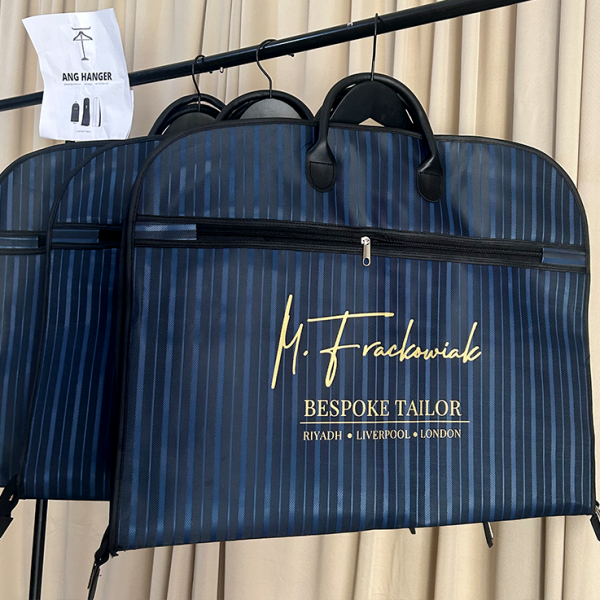
A suit leaves your store in a bag. What happens next depends entirely on the bag you chose. A flimsy poly cover gets tossed before the customer reaches home. But custom logo suit covers — solid fabric, your logo on the front, a proper zipper — stay in their closet for years. Every time they pack for a trip, your brand is right there.
Getting the material and branding right isn’t complicated. You just need to know what to check before placing an order. Here’s the full picture.
First — What Is a Suit Cover, Really?
Let’s pin down the term. A suit cover isn’t the same as a garment suit bag designed for air travel. Instead, it’s a protective sleeve — usually zippered — that shields a single suit or jacket from dust, moisture, and light friction.
Retailers use them at the point of sale. Tailors hand them out after alterations. Meanwhile, customers use them at home for closet storage garment bags purposes. The common thread? The bag stays with the garment long after the transaction is over.
That’s exactly why the logo matters. You’re not branding a carrier bag that disappears in an hour. You’re branding something that lives in someone’s home for years.
Pick Your Material First for Custom Logo Suit Covers
Material choice shapes how the cover feels, how long it lasts, and how your branding looks on it. Here are the three main options.
Non-Woven Polypropylene
This is the most common choice. Lightweight, affordable, and breathable. It lets air circulate — which matters if suits are stored in humid climates. The surface also takes screen printing well.
The downside? It doesn’t feel premium. For a mid-range brand or dry cleaner, it’s perfect. For a luxury garment bag experience, however, you’ll want something better.
Nylon or Polyester Woven
Woven fabrics step up the quality immediately. They drape better and feel noticeably stronger. Many also come with a water-resistant coating — useful if customers carry suits between cars and venues, rather than just storing them at home.
These materials also hold embroidery and heat-transfer logos better than non-woven surfaces. So if your brand identity leans toward premium, woven is the starting point.
Cotton Canvas or Linen Blend
This is the top shelf. Cotton canvas garment suit bags look and feel like a product worth keeping. They breathe naturally, age gracefully, and take embroidery beautifully — all at once.
The cost is obviously higher. But for bespoke tailors, high-end menswear shops, and brands where the unboxing IS the experience, canvas delivers the message without saying a word.
Where the Logo Goes on Custom Logo Suit Covers
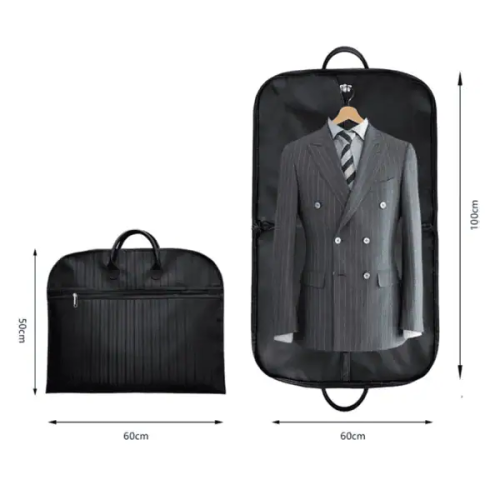
A suit cover that’s too tight wrinkles the shoulders. On the other hand, one that’s too loose lets the garment shift, which also causes creasing. Neither is what you want.
Standard suit covers run around 24 inches wide by 40 inches long. That fits a typical jacket and trousers on one hanger. For overcoats or long dresses, however, you need extra length — around 48 to 54 inches. For travel versions, a folding business suit travel bag style may work better than a full-length sleeve.
Ask your supplier for exact internal dimensions, not just the external ones. A half-inch difference sounds small. Across a rack of fifty suits, it’s not.
Where the Logo Goes — And Why Placement Matters
Most brands put the logo center-chest. It’s the first thing a customer sees when they unzip the cover. That’s why it works.
Some brands, by contrast, prefer the bottom corner — subtle, off to the side, almost like a signature. Others go for a full back print, especially on custom logo suit covers used for travel. The back panel faces out when the bag is folded, which means free visibility in hotel lobbies and airport lounges.
The only wrong move? Cramming the logo somewhere it doesn’t belong because you saw someone else do it. Instead, pick the placement that matches your brand personality. Quiet luxury or loud confidence — either works, as long as it’s intentional.
How Your Logo Gets Applied to Custom Logo Suit Covers
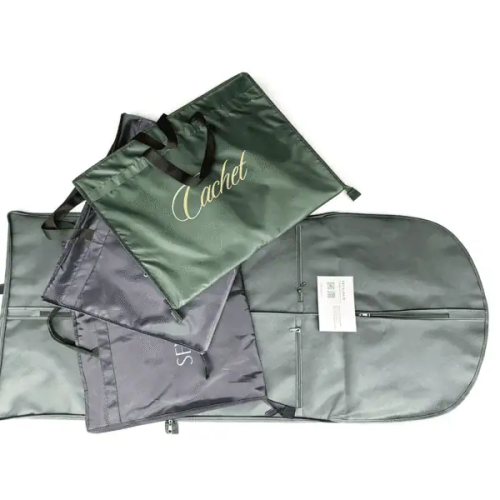
Three methods dominate the market, and each suits a different budget and feel.
Screen printing is the most common. Affordable. Clean. It holds up well through repeated use and works on non-woven and smooth woven surfaces alike.
Heat transfer gives you more color detail and gradient control. In terms of both cost and perceived quality, it sits right between screen printing and embroidery.
Embroidery is the premium choice. Raised thread. Tactile. Permanent. It reads as intentional craftsmanship — exactly the message high-end suit covers should send. The catch? Embroidery costs more and requires woven or canvas fabric. You can’t embroider thin non-woven material.
Ready to Order Custom Logo Suit Covers?
Custom logo suit covers protect more than garments. They protect your brand presence — in closets, on trips, and any time a customer reaches for that suit they bought from you.
At AngHanger , we manufacture custom logo suit covers, luxury garment bags , hangers, and complete packaging solutions for clothing brands and retailers worldwide. Simply pick your material, size, logo method, and finish. We’ll produce a sample so you can see, feel, and approve every detail before your main order runs
 English