
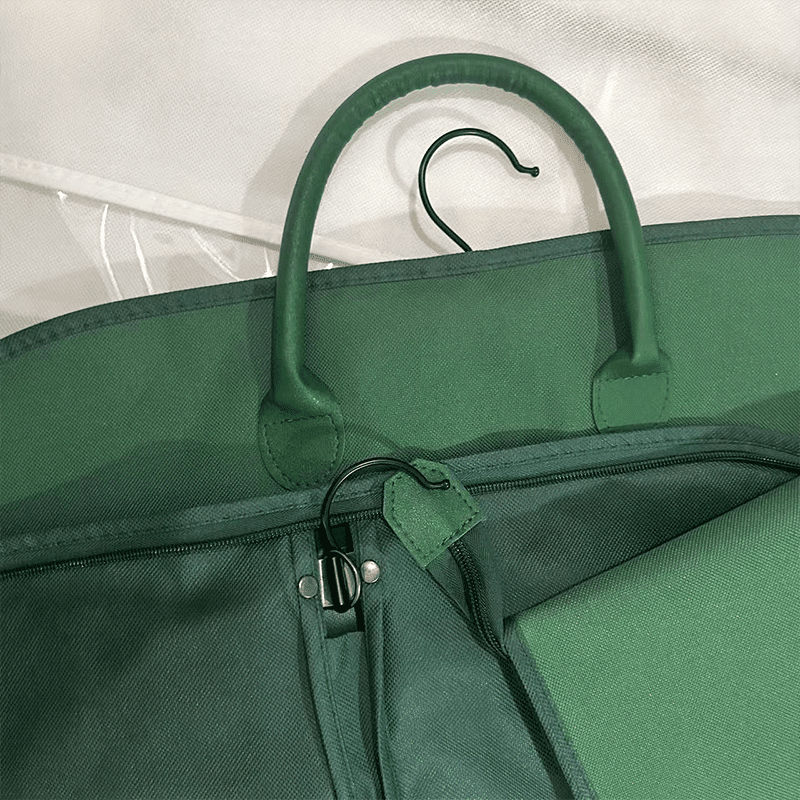
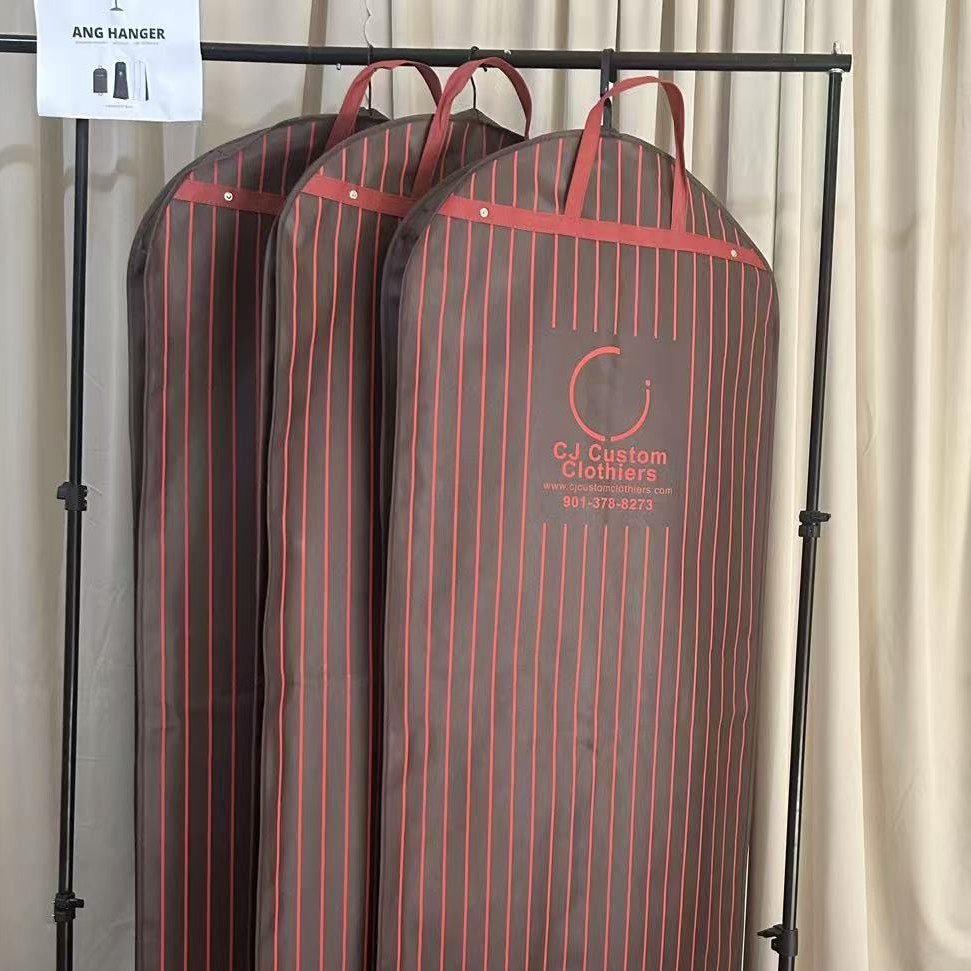
You’ve decided to order hanging clothes bags wholesale . You’ve picked the material and the size. Then the supplier asks: “Do you want your logo on it?” And suddenly you’re staring at three options — screen print, heat transfer, or no logo at all. Each one changes the cost per unit. Each one wears differently over time. Pick wrong, and your branding looks cheap or peels after two uses.
This isn’t a huge decision. But it’s one worth getting right before you order hundreds of bags. Here’s how the three options actually compare.
Screen Printing on Hanging Clothes Bags Wholesale — The Affordable Workhorse
Screen printing is the most common way to brand custom garment bags and for good reason. It’s affordable. It’s fast to produce. And on non-woven polypropylene — the material most hanging clothes bags wholesale orders use — it bonds cleanly without bleeding.
The process is straightforward. Ink gets pushed through a mesh screen onto the bag surface, one color at a time. Simple logos with bold shapes and one or two colors come out sharp. A single-color logo on a white or black bag? Screen printing handles that perfectly and keeps your per-unit cost low.
Where it struggles is with fine detail. Thin lines, small text, or gradients tend to lose definition. If your logo has a delicate serif font or a photographic element, screen printing will soften those edges. It won’t look bad — just not as crisp as the original file.
Durability-wise, screen printing holds up well through repeated handling. After dozens of zips and unzips, folding and unfolding, the print stays intact. It won’t crack like old t-shirt prints. The only real wear point is abrasion — if the bag gets scraped against rough surfaces repeatedly, the ink can thin over time.
For men suit bags that travel with customers or sit on retail racks, screen printing is the safe, reliable middle ground. Affordable enough to not blow the budget. Durable enough to last.
Heat Transfer on Hanging Clothes Bags Wholesale — Sharper, but Pricier
Heat transfer works differently. Instead of pushing ink through a screen, your logo is printed onto a thin film. That film gets pressed onto the bag under heat and pressure. The result bonds at a molecular level — more like welding than printing.
The advantage is clarity. Multi-color logos come through vividly. Gradients, photographic elements, and fine typography all stay sharp. On darker fabrics — black, navy, charcoal — heat transfer pops noticeably more than screen printing. For custom garment bags where the logo is the star, heat transfer is the way to get there.
The trade-off is cost. Heat transfer runs more per unit than screen printing, especially for smaller orders where the setup cost doesn’t spread as thin. For hanging clothes bags wholesale orders in the thousands, the per-unit gap narrows. Under five hundred, it’s noticeable.
Durability isn’t worse — just different. Heat transfer sits on top of the fabric rather than sinking into it. That makes it slightly more vulnerable to peeling if the bag gets folded repeatedly at the exact spot where the logo sits. On a hanging bag that stays flat in storage, this isn’t an issue. On a men suit bag that gets folded, packed, and yanked through airport security, placement matters more than the method itself. Put the logo where the bag doesn’t crease, and heat transfer will last just as long as screen print.
No Logo — When Less Is Actually More
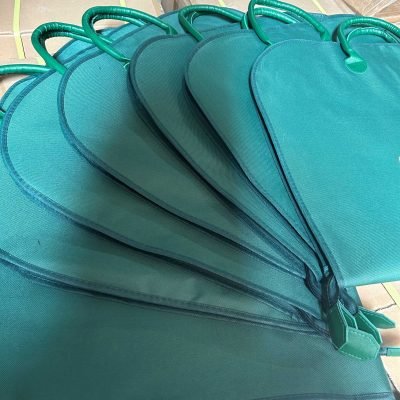
Not every bag needs a logo. Sometimes the right branding decision is none at all.
Plain hanging clothes bags wholesale make sense in three situations. One, your budget is tight and every cent per unit matters. Skipping the logo drops the per-bag cost immediately — no setup fee, no print charge, no extra production step. Two, your brand already appears elsewhere — on the garment tag, the hanger, the tissue paper, the box. If the bag is the fifth branded touchpoint in a single transaction, it might be overkill. Three, you sell to other retailers who will rebrand the bag themselves. A blank bag gives them a clean canvas. A bag with your logo doesn’t.
There’s also a subtler argument. A plain, high-quality bag in a solid color — black, cream, navy — can feel more premium than a bag with a cheap-looking print job. Nobody notices a good screen print. But a bad one? It’s the first thing they see. If your budget only covers a low-quality logo application, skipping it entirely preserves the bag’s perceived quality.
Ask yourself this: would you rather hand a customer a clean, unbranded bag that feels expensive, or a branded one that looks cheap? If the logo budget isn’t there, choose the better bag.
How to Decide for Your Hanging Clothes Bags Wholesale Order
Three questions will get you to the right answer faster than any spec sheet.
How complex is your logo? Simple, bold, one or two colors? Screen print. Detailed, multi-color, or photographic? Heat transfer. Either way, send a vector file. The supplier can’t work with a screenshot.
How is the bag used? Hung in a closet and rarely touched? Either method holds up fine. Folded, packed, and handled frequently? Screen print has a slight edge on durability at the crease points, but logo placement matters more than the method. Keep the logo away from fold lines.
What’s your order size? Under 500 units, screen printing is noticeably cheaper. Over 1,000, the gap shrinks. Above 2,000, the per-unit difference is small enough that the decision should be about logo quality, not cost.
Still unsure? Ask for samples. One bag screen printed, one heat transferred, one plain. Compare them side by side under the lighting your customers will actually see. Fold them. Unfold them. Hang a suit inside. Five minutes of handling tells you more than any supplier’s spec PDF.
Ready to Order Hanging Clothes Bags with Your Logo?
At AngHanger , we produce hanging clothes bags wholesale in non-woven, nylon, and PEVA — with screen printing, heat transfer, or plain finish. Choose your material, size, and branding method. We’ll send pre-production samples so you can compare the logo quality before committing to a full order.
We also manufacture men suit bags , bridal garment covers, padded hangers, and full packaging suites. One supplier, consistent branding, no coordination headaches.
 English