
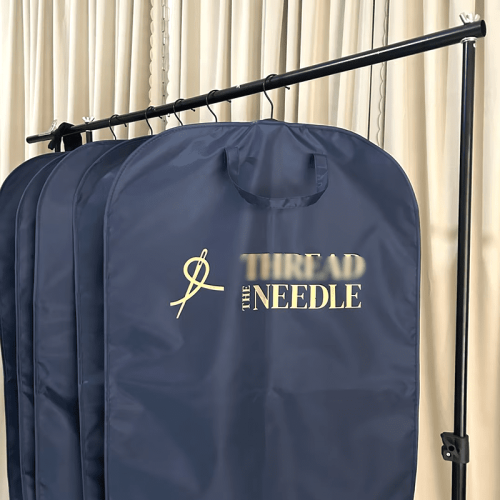
Most boutique owners learn this one the hard way. Mid-November. Holiday rush. A customer buys a wool coat, and you reach for a clothes bag — but the shelf is empty. You ordered what you thought was enough two months ago. Turns out, it wasn’t.
Ordering clothing garment bags wholesale without a rough monthly plan leads to two outcomes. Either you run out at the worst possible moment, or you sit on boxes of inventory that eat up storage space. Here’s how to find the middle.
First — Figure Out How Many Clothing Garment Bags Wholesale You Need
Don’t guess. Look at last month’s sales. How many garments left your store? How many of those went out in a bag? That’s your baseline. Not every item needs one — accessories, folded t-shirts, and small items usually don’t. But suits, dresses, coats, and anything on a hanger almost always do.
Then factor in waste. Bags get damaged in storage. Staff grab two when one would do. Zippers fail on a handful from every batch and those get tossed before reaching a customer. Add 5 to 10 percent on top of your sales number to cover what never makes it to the front of the store. That’s your actual monthly burn rate for custom garment bags .
Separate Display from Giveaway Clothing Garment Bags Wholesale
This is the split most boutiques miss. The best garment bag hanging on your retail rack, protecting a $500 suit, isn’t the same grade as the one you hand customers at checkout. Display bags cycle out every few months as they pick up dust and handling marks. Giveaway bags leave with each purchase and never come back.
Track them separately. A shop might go through forty display-grade bags a month on the rack rotation, while sending another three hundred giveaway bags out the door. Ordering one number without breaking it down means you’ll always be short in one category and overstocked in the other. For clothing garment bags wholesale planning, this split is everything.
What a Typical Boutique Actually Orders
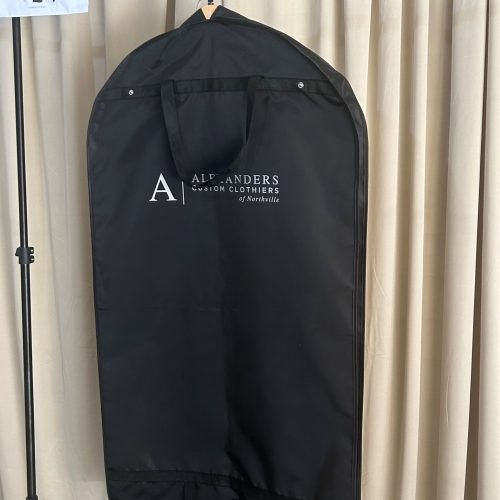
Numbers help. A small boutique doing thirty to fifty garment sales a month — think single-location, curated selection — burns through roughly 100 to 200 bags monthly after factoring in display rotation and waste. A mid-size shop moving a hundred garments or more per month runs closer to 300 to 500. Multi-location brands with high foot traffic can push past 1,000.
Monthly ordering sounds frequent, but clothing garment bags wholesale lead times usually sit at two to four weeks after sample approval. Add shipping, and ordering monthly means cutting it close every single time. Most boutiques settle on quarterly orders — three months of stock at a time — which balances lead time safety against storage burden.
Seasonality Changes Everything
A boutique selling linen dresses in July and wool coats in December has two very different bag needs. Summer garments are lighter. The bags can be lighter too — thinner non-woven, no heavy zippers. Winter coats need stronger bags, often with wider gussets. Ordering the same quantity year-round ignores that reality.
The smarter approach: pre-order heavy-gauge custom garment bags for the winter season in August, and lighter stock for spring in January. The annual total stays similar. The per-order spec changes. Suppliers prefer the predictability, and you avoid January markdowns on coat-weight bags you don’t need in July.
MOQ for Clothing Garment Bags Wholesale — The Number That Shapes It
Most clothing garment bags wholesale suppliers set minimum order quantities between 300 and 1,000 units for standard stock. Add a custom logo, and that number often climbs. Add a custom color on top, and it climbs again.
If your monthly burn is 200 bags, a 500-unit MOQ covers two and a half months — a comfortable quarter. If your burn is 50 bags a month, that same MOQ gives you ten months of stock, most of it sitting in storage. In that case, ask the supplier about split production or stock bag programs where you buy plain bags in smaller lots and add branding later. Not every factory offers this. The ones that do are built for boutiques, not just big chains.
Keep a Buffer — But Not Too Much
Fifteen to twenty percent extra per order usually covers the surprises: a late shipment, a sudden wholesale account order, a torn bag that ruins three others in the box during transit. More than twenty percent, and the spare clothes bag stock competes with merchandise for backroom space that’s already tight.
Set a reorder trigger too. Don’t wait until the shelf is bare. When stock dips below a three-week supply, place the next order. That window covers the lead time and gives the supplier a small buffer on their end. It’s boring math, but it’s also the difference between a smooth season and a panicked Tuesday.
 English