
Wooden Hangers For Coats: How to Pick the Right Shoulder Width (Avoid Shoulder Dents & Returns)
Marco, who owns a bespoke suit shop in Boston, used to hang all his suits on “one-size” wooden hangers for coats. Then a regular client returned a $2,200 wool suit with permanent shoulder dents: “The hanger’s shoulders were too narrow—they pressed into the suit’s padding, ruining the shape,” the client said. Marco checked his inventory and found 15% of his suits had subtle dents from mismatched hangers. “I lost $6,000 in returns and re-tailoring that quarter,” he said. “I thought shoulder width was a small detail. Now I know it’s make-or-break for suits.”
A suit’s shoulders are its most structured part—too-narrow hangers crush padding, too-wide ones stretch the fabric, and both lead to returns or unhappy customers. Picking the right shoulder width for wooden suit hangers isn’t guesswork—it’s about matching the hanger to the suit’s fit, fabric, and style. Below’s how to do it, with real stories from suit retailers.
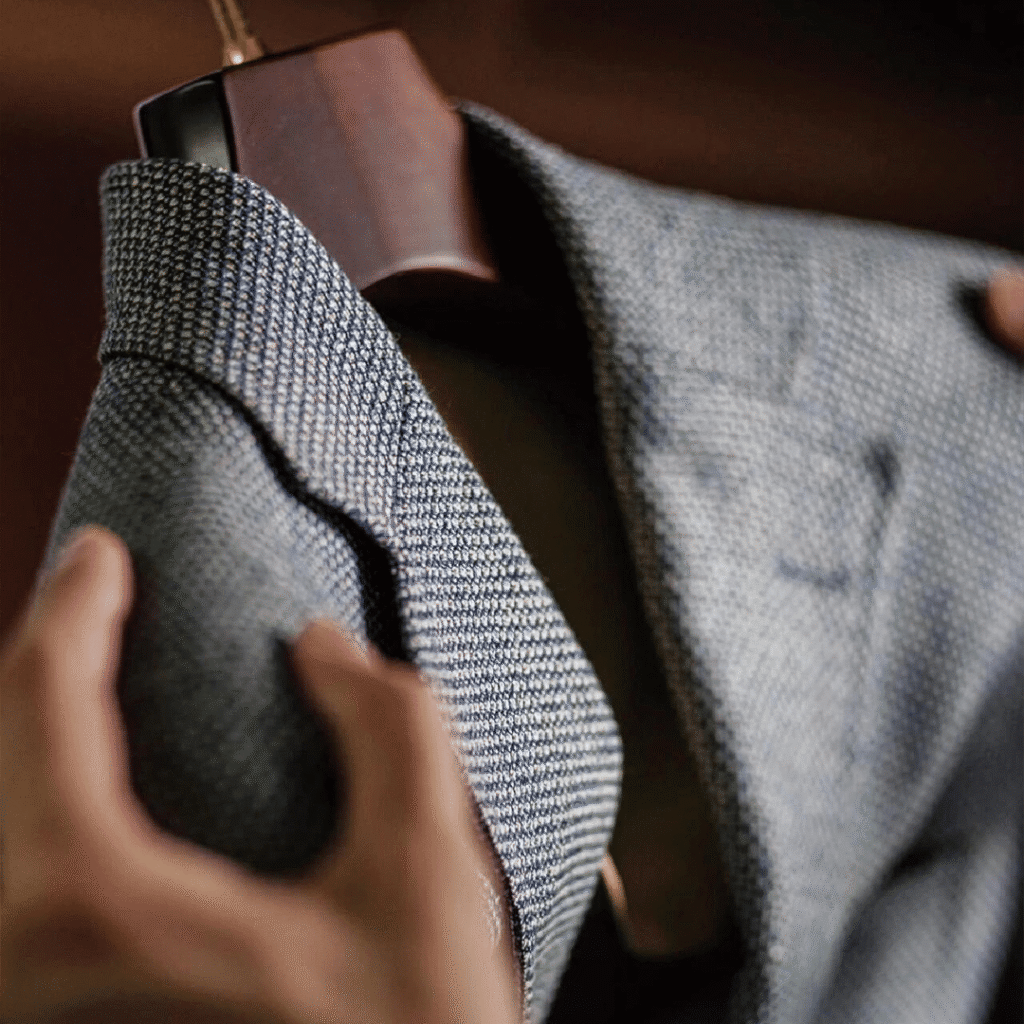
Step 1: Measure Your Suit’s Shoulder Width First (Don’t Guess!)
The biggest mistake retailers make is skipping this step. A suit’s “shoulder width” is the distance from the top of one shoulder seam to the other—this is what determines the hanger you need.
Marco now measures every suit before hanging it: “For a slim-fit suit with 18-inch shoulder seams, I use an 18-inch wide hanger. For a regular-fit suit with 19-inch seams, I use a 19-inch hanger. No more guessing.” He even keeps a tape measure by the fitting room: “If a client buys a suit, I measure it and recommend a matching hanger for their home—they love the attention to detail.”
A men’s chain store took this further: they labeled each suit’s tag with “Recommended Hanger Width: 17.5 inches” and saw returns drop by 28%. “Customers used to buy our suits, hang them on whatever hanger they had at home, and return them when they got dents,” said the buyer. “Now they know exactly what to use—no more surprises.”
Pro tip: Add 0.25 inches to the suit’s shoulder width for thick fabrics (like wool or cashmere)—it gives padding room to breathe.
Step 2: Match Hanger Width to Suit Fit (Slim vs. Regular vs. Wide)
Suit fits vary—and so should hanger widths. A hanger that works for a slim-fit suit will ruin a wide-shouldered (oversized) silhouette suit, and vice versa.
Slim-fit suits (16–17.5 inch shoulder seams): Use 16–17.5 inch narrow-shoulder hangers. Too-wide hangers stretch the fabric, making the suit look baggy. A boutique in NYC saw this: “We used 18-inch hangers for slim-fit suits—customers said the shoulders looked ‘stretched out.’ Switching to 17-inch hangers fixed it, and sales rose 14%.”
Regular-fit suits (18–19 inch shoulder seams): Use 18–19 inch standard-shoulder hangers. This is the most common width, and it works for most off-the-rack suits.
Wide-shoulder / oversized silhouette suits (19.5+ inch shoulder seams): Use Wide Shoulder Hangers (20–21 inches). A luxury suit shop in London learned this: “Our Italian wide-shouldered silhouette suits have 20-inch shoulders—standard hangers made them look slouched. Wide hangers keep the shoulders sharp, and clients comment on how ‘the suit looks like it’s still on the mannequin.’”
Why it works: Matching fit to hanger width preserves the suit’s intended shape—no more dents or stretching.
Step 3: Consider Fabric (Thick vs. Thin)
Heavy fabrics (wool, tweed) need more hanger support than light ones (linen, cotton). Even if the shoulder width matches, a flimsy hanger will bend under thick fabric—causing dents.
Marco uses Cedar Hangers for his wool winter suits: “Cedar is dense, so it holds the weight of thick wool without bending. It also repels moths—double win. My winter suit returns dropped from 12% to 3% after switching.” A linen suit shop, though, uses lighter wooden hangers: “Linen is thin—heavy cedar would press into the fabric. We use a 17-inch light wood hanger, and it works perfectly.”
Pro tip: For heavy fabrics, look for hangers with reinforced shoulders (extra wood or metal inserts)—they distribute weight evenly, avoiding dents.
3 Mistakes to Avoid (That Cause Most Dents & Returns)
Using “one-size” hangers for all suits: This was Marco’s first mistake. Slim and wide suits need different widths—one-size fits none.
Hanging suits on plastic hangers first: Plastic stretches or bends under suit weight, leaving dents before the hanger even touches the suit. Always use wood for suits.
Not asking your supplier for custom widths: A Wood Hangers Supplier can make hangers in any width (16–21 inches). Marco now orders 17-inch, 18.5-inch, and 20-inch hangers—no more forcing suits onto the wrong size.
Wrapping Up
Marco’s suit shop now has a “hanger width station” by the stockroom: “We measure each suit, grab the matching hanger, and tag both. Returns are down 40%, and clients say our suits ‘hold their shape better than any other shop.’”
Picking the right shoulder width for wooden hangers for coats isn’t complicated—it’s about measuring, matching fit to width, and considering fabric. A $5 hanger that fits can save you thousands in returns and re-tailoring.
Next time you hang a suit, ask: “Does this hanger match the suit’s shoulder width?” If not, swap it. Your suits (and your customers) will thank you.
ANG specializes in Custom Wooden hangers for global fashion brands. Contact us for a free consultation Design, quotation, and Obtain samples.
 English