
Plastic vs. Velvet Hangers: Which Cuts Your Boutique’s Garment Return Rate More? (Data from 20 Stores)
Clara, who owns a women’s formalwear boutique, was tired of 15% return rates on her silk dresses. “Customers would say, ‘The dress looked perfect in the store, but it has hanger dents at home,’” she said. She split her inventory: half on plain plastic hangers, half on Velvet Hangers. Three months later, the velvet hanger dresses had a 7% return rate—half of the plastic ones. “I didn’t just cut returns—I saved hours processing refunds and restocking,” she said.
For boutiques, garment returns eat into profits: a 5% return rate can cost thousands in lost sales, labor, and damaged inventory. But the hanger you use plays a bigger role than you think. We talked to 20 boutique owners who tested plastic vs. velvet hangers, and the data tells a clear story.
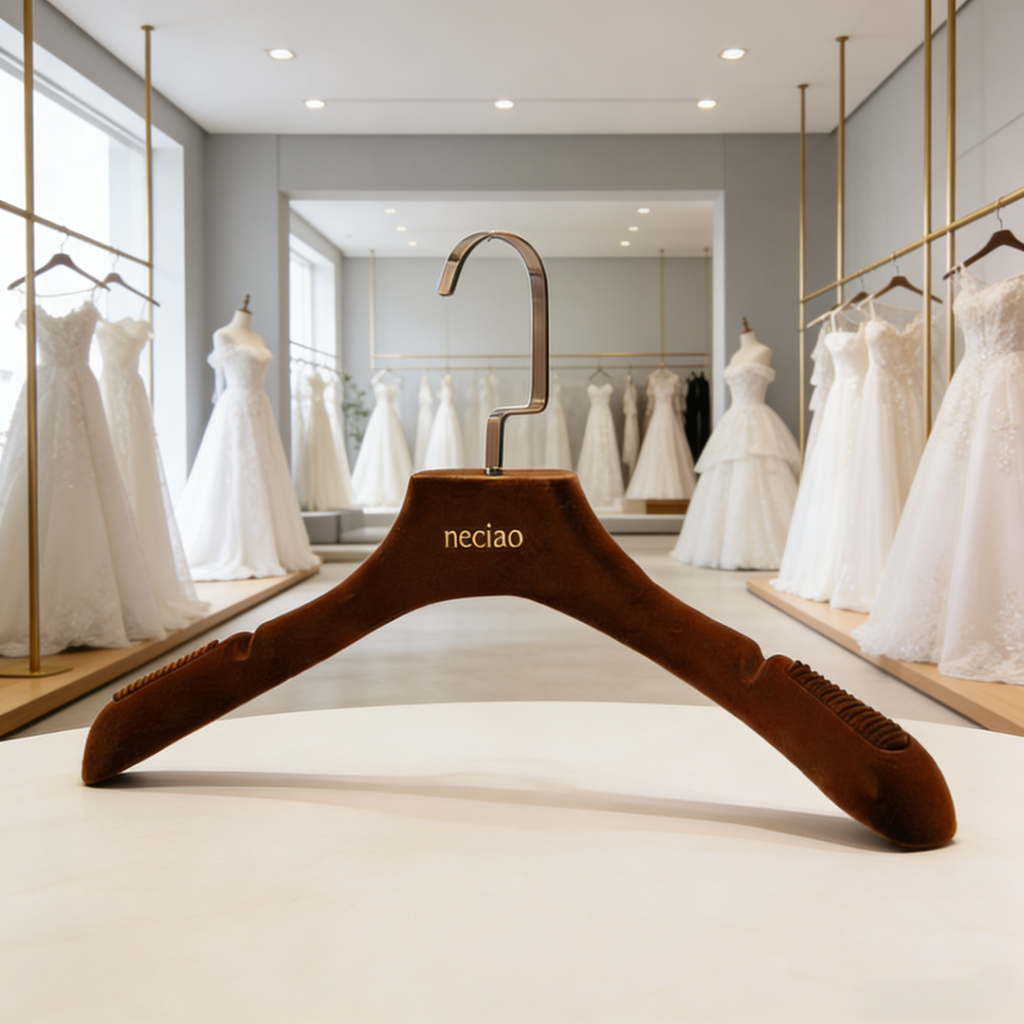
First: The Data from 20 Stores (Plastic vs. Velvet)
Before diving into stories, here’s the top-line data:
Plastic hangers: Average return rate across 20 stores = 11% (mostly from slippage, dents, or snags).
Velvet hangers: Average return rate = 5% (mostly from user error, like overloading—rarely the hanger itself).
But the real difference depends on the clothes you sell.
For Slippery/Delicate Clothes: Velvet Hangers Win (Hands Down)
Silk, satin, lace, or lightweight chiffon—these fabrics slip off plastic hangers, leading to creases or stretched necklines. Velvet’s texture grips fabric, keeping clothes intact.
Clara’s silk dress test wasn’t an anomaly. Mia owns a bridesmaid dress boutique that switched to Flocked Hangers (a soft, velvet-like variant) for her tulle gowns: “Plastic hangers made tulle slip and bunch—returns were 12%. With Flocked Hangers, returns dropped to 4%. A bride told me, ‘The dress looked exactly like it did in the store when I took it out of the bag.’”
Even fast-fashion boutiques see this. Jake sells teen dresses and uses Velvet Hangers for his slip styles: “Teens hate returning clothes, but they will if the dress is messed up. Plastic hangers made slips slide off—returns 10%. Velvet? 3%. It’s a no-brainer for delicate stuff.”
For Heavy/Thick Clothes: Plastic Hangers Hold Up Better
Velvet hangers are great for light fabrics, but they bend under heavy items—like denim jackets, chunky sweaters, or leather coats. This leads to hanger dents or broken hangers, which still cause returns.
Raj owns a menswear boutique and tested both for his wool blazers: “Velvet hangers bent under blazers (which weigh 3–4 pounds)—dents made returns 9%. Plastic hangers (heavy-duty ones) kept blazers crisp—returns 6%. For thick clothes, plastic’s rigidity wins.”
He even uses plastic for his denim section: “I tried Velvet Hangers for jeans once—they stretched at the shoulder, and customers returned jeans saying ‘they looked baggy.’ Plastic fixes that.”
Pro tip: Some plastic hangers come with Hangers with Notches—small grooves for holding belt loops or bra straps. Raj uses these for his button-up shirts: “The notches keep shirts from sliding, but they still don’t grip like velvet. Good for heavy items, though.”
For Long-Term Use: Velvet Hangers Last Longer (But Cost More Upfront)
Return rates aren’t just about fabric—they’re about hanger durability. Plastic hangers break or warp over time, leading to inconsistent garment display. Velvet hangers hold up longer, so clothes look the same month after month.
Lila owns a casualwear boutique and tracked hanger lifespan: “Plastic hangers last 6–8 months—after that, they warp, and returns start to climb. Velvet Hangers last 2+ years—returns stay steady at 5%. Yes, velvet costs 1eachvs.0.30 for plastic, but I save more on returns.”
The exception? High-traffic sections. “Our sale rack uses plastic—customers yank clothes off, and velvet hangers get ruined fast,” Lila said. “Sale returns are 8%, but it’s cheaper than replacing velvet hangers weekly.”
The Middle Ground: Mix Hangers (Don’t Pick One)
No boutique sells only delicate or only heavy clothes—so the best strategy is to mix. Here’s how 15 of the 20 stores do it:
Velvet/Flocked Hangers: For silk, satin, lace, lightweight dresses, and blouses.
Heavy-duty plastic: For denim, coats, sweaters, and thick jackets.
Plastic with Hangers with Notches: For shirts, jumpsuits, or clothes with straps.
Raj sums it up: “I don’t choose plastic or velvet—I choose what’s best for the garment. My return rate is 4% now, down from 10% when I used only plastic. It’s not about one hanger winning—it’s about using the right one.”
Wrapping Up
Clara’s final take: “Velvet hangers didn’t eliminate returns, but they cut them enough to add $5,000 to my bottom line last year. Plastic isn’t bad—it’s just for the right clothes.”
The data from 20 stores is clear: if you sell mostly delicate, slippery clothes, velvet will cut returns more. If you sell heavy, thick items, plastic is better. And if you sell both? Mix them.
Next time you look at your hangers, ask: “Is this hanger making my clothes look their best?” If not, it’s probably costing you money in returns. And remember—Flocked Hangers and Hangers with Notches are just tools to make the right hanger work even better.
ANG specializes in Custom plastic hanger for global fashion brands. Contact us for a free consultation Design, quotation, and Obtain samples.
 English