
How to Choose the Right Size Paper Gift Bags for Retail: Avoid These 3 Mistakes
Elena, who runs a women’s clothing boutique in Denver, ordered 500 “medium” paper gift bagss last winter. They worked for blouses, but when she tried to pack her best-selling wool coats, the bags split at the seams. For small dresses, the bags looked comically large—customers joked they could fit a week’s worth of clothes. “I wasted $300 on bags that only worked for half my inventory,” she said.
Choosing the right size paper gift bags for retail—especially clothing retail—isn’t about “medium” or “large.” It’s about matching the bag to how your products fold, their weight, and how customers carry them. Most retailers mess up the same three things, turning packaging into a hassle instead of a help. Below’s what to avoid, with real stories from clothing shops, plus a nod to when a Gusseted Paper Bag makes all the difference.
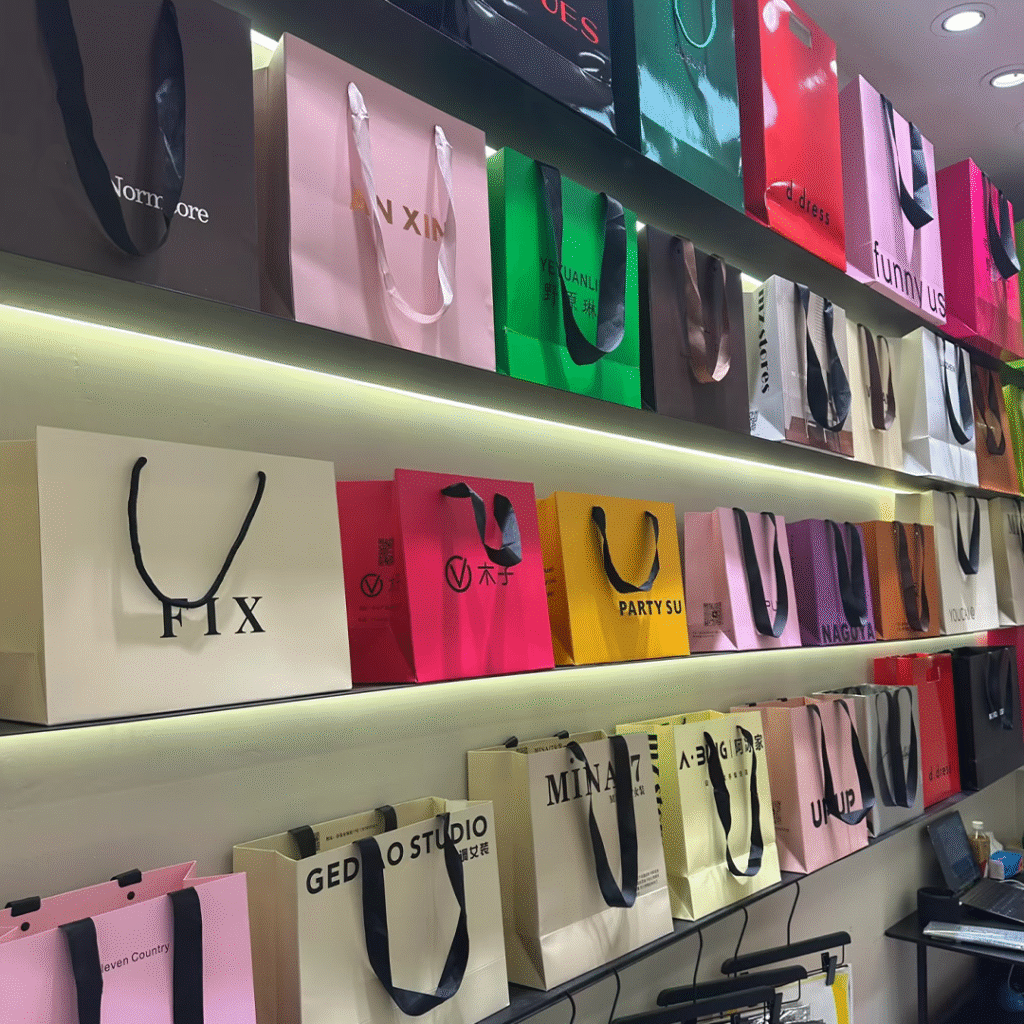
Mistake: Guessing “One Size Fits Most” (Spoiler: It Never Does)
The biggest myth in retail packaging? That one bag size works for “most” clothes. A sweater folds differently than a dress; a pair of jeans weighs more than a scarf. Assuming one size fits all leads to either squashed garments or bags that feel wasteful.
Elena’s mistake was ordering 16x12x3-inch bags for “everything.” Her wool coats (which fold to 18x14x5-inch) stretched the bags until they tore. Her silk scarves (which fold to 8x6x1-inch) swam in the same bags, making the purchase feel less valuable. “A customer asked, ‘Did you run out of small bags?’” she said. “It made us look unorganized.”
Fix: Sort your top 3–4 bestsellers by folded size, then order a bag for each. For Elena, that meant:
1:Small (10x8x2-inch) for scarves and jewelry.
2:Medium (16x12x3-inch) for blouses and thin sweaters.
3:Large (20x16x4-inch) for coats and thick knitwear.
Yes, it means ordering 3 sizes instead of 1—but customers notice the better fit, and you’ll waste fewer bags.
Mistake: Ignoring How the Garment Folds (Not Just Its Flat Size)
Retailers often measure clothes flat (e.g., a dress laid out) instead of folded (how it actually goes into the bag). This leads to bags that are “technically” the right size but too tight once folded.
A menswear shop in Chicago learned this the hard way. They measured their dress shirts flat (28×20-inch) and ordered 30×22-inch bags—plenty of room, they thought. But when folded (shoulder to hem, then in half), the shirts became 18×14-inch but thicker (due to layers). The bags fit, but the folded edges creased, and customers returned shirts saying, “It arrived wrinkled.”
Fix: Fold your garment exactly how you’ll pack it (not flat), then measure its height, width, and depth (how thick it is). Add 1–2 inches to each number for wiggle room. The menswear shop started using 20x16x3-inch bags (adding space for the folded thickness) and saw wrinkle returns drop by 60%.
Pro tip: For bulky items like puffer jackets or layered outfits, a Gusseted paper gift bags (with expandable side panels) works wonders. The gusset adds extra depth without making the bag wider, so the jacket fits without squishing. A skiwear shop in Vermont swears by them: “We used to struggle with thick coats—now the gusset expands, and the bag stays neat.”
Mistake: Forgetting Customer Use (How Will They Carry It?)
A bag that fits your garment in the shop might fail when a customer carries it. Too tall, and it drags on the ground; too short, and they have to crumple the top closed, ruining the clothes inside.
A California swimwear brand ordered 14x10x2-inch bags for their cover-ups. The bags fit perfectly on the shelf, but when customers carried them (by the handles), the bottom hit their knees, dragging the cover-up against the ground and picking up dirt. “We had to rebag items 10 times a day,” the manager said.
Fix: Test carry your bags. Pack a folded garment, grab the handles, and walk around—if the bag hits your legs, it’s too long. If you have to fold the top down to carry it, it’s too tall. The swimwear brand switched to 12x8x2-inch bags—still big enough for the cover-up, but short enough to carry without dragging.
3 Quick Tools to Get Sizing Right
The “Fold Test”: Keep a sample of your top 3 garments folded in the stock room. When ordering bags, hold the sample next to the bag dimensions—if it looks tight, size up.
Supplier Samples: Most bag companies send free samples. Test them with your folded clothes before ordering in bulk.
Size Charts with a Twist: Instead of generic “small/medium/large,” label your bags by garment: “Scarf Size,” “Sweater Size,” “Coat Size.” It makes picking the right one faster for staff.
Wrapping Up
Elena now orders three sizes and trains her staff to grab the “coat bag” for coats, “blouse bag” for blouses. “Customers comment on how ‘neat’ everything looks,” she says. “And we haven’t had a torn bag in months.”
Choosing the right size paper bags for retail is about (details): folding like a customer, testing the carry, and admitting one size won’t work. Whether you need a compact bag for scarves, a roomy one for coats, or a Gusseted Paper Bag for bulky items—getting the size right turns packaging into a small but noticeable win for your brand.
Next time you order, grab a folded sweater, a coat, and a scarf. Measure each, add 1–2 inches, and order accordingly. Your inventory (and your customers) will thank you.
Need Expert Guidance?
ANG specializes in custom packaging for global fashion brands. Contact us for a free consultation Design and Samples.
 English