
Clothing Bags Materials: Durable Picks to Protect Suits
Carlos, a corporate lawyer, still cringes thinking about his first big client meeting. His wool suit arrived at the hotel crushed—his cheap plastic clothing bags had torn in transit, leaving the jacket smudged with dirt and lined with creases. “I spent $300 on that suit, and a $5 bag ruined it,” he said. “Now I know the material matters more than the price tag.”
For anyone with suits—whether you wear them daily, travel for work, or store them seasonally—the right clothing bags material isn’t just about “holding” the suit. It needs to repel dirt, resist tears, prevent wrinkles, and breathe (to avoid mustiness). Below are 5 durable materials that do exactly that, with real stories and design tips—plus where suit bag, suit cover, and more fit in.
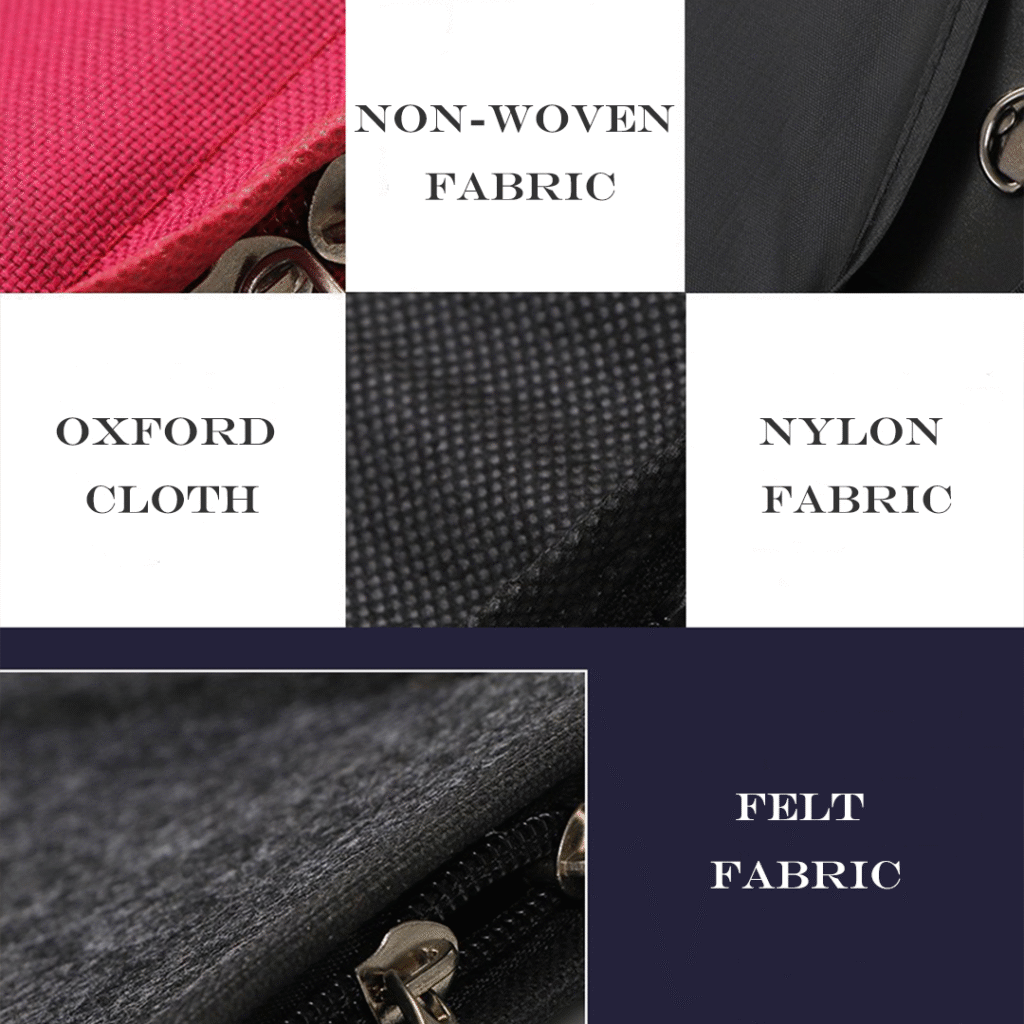
Heavy-Duty Nylon: Tough for Travel & Daily Use
Nylon is a workhorse for clothing bags—especially 420D or 600D denier (thicker = more durable). It’s water-resistant (shields suits from rain or spills in transit), tear-proof (handles rough airport baggage), and lightweight enough to carry daily.
Carlos switched to a 600D nylon garment bag for work trips: “Last month, it got dragged through a puddle at the airport, and my suit stayed dry. The material doesn’t snag on zippers or other bags, so no pulls on the wool.” It’s also easy to wipe clean—critical for a suit bag that goes from trains to client offices.
Best for: Travel, daily commutes, frequent use.
Design tip: Pair with a smooth polyester lining (prevents friction that causes wrinkles).
Canvas: Breathable for Long-Term Storage
Canvas (cotton or cotton-poly blend) is thick, breathable, and perfect for storing suits in closets. Unlike plastic, it lets air circulate—so wool or cashmere suits don’t trap moisture (which leads to mildew or odors).
A tailor I know recommends canvas for clients storing wedding suits or tuxedos: “Canvas is gentle on delicate fabrics like silk-lined jackets. It’s sturdy enough to keep dust out but soft enough not to scratch the suit’s surface.” Many high-end suit cover designs use canvas for this reason.
Best for: Closet storage, seasonal suits, delicate fabrics.
Design tip: Choose waxed canvas for extra water resistance (great for basements or humid closets).
Leather (Genuine or Faux): Luxe for High-End Suits
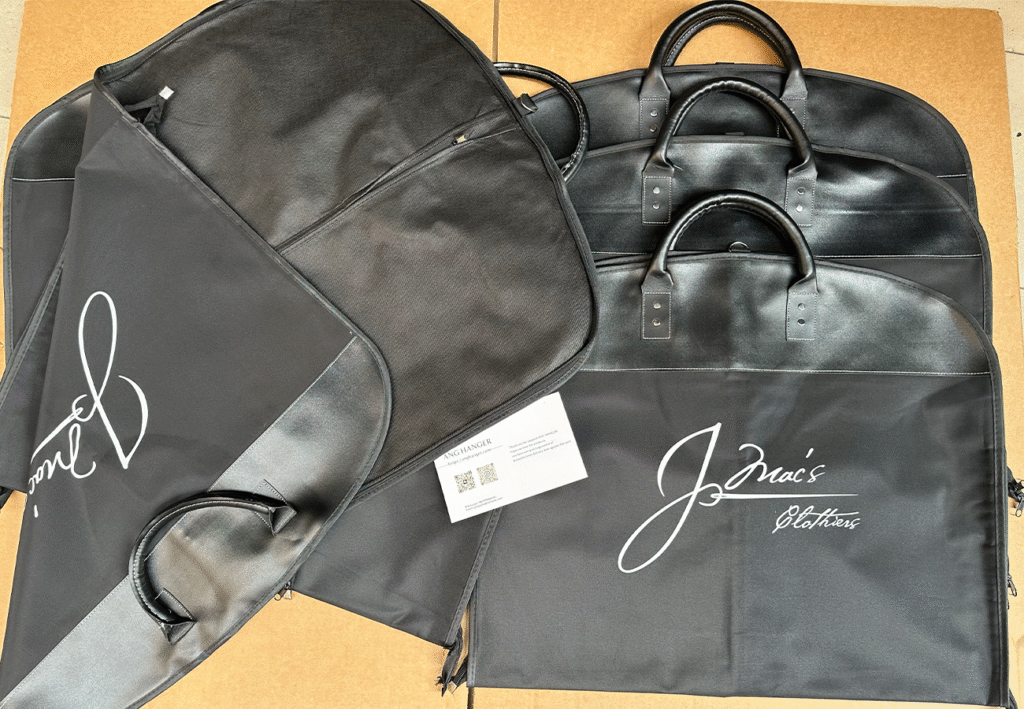
Leather (or high-quality faux leather) adds a premium touch while protecting luxury suits. It’s naturally water-resistant, tear-proof, and develops a rich patina over time—making it a favorite for designer suits or heirloom tuxedos.
A luxury menswear store uses faux leather clothing bags for their custom suits: “Clients love that the bag feels as special as the suit. It’s thick enough to prevent crushing in storage, and the smooth surface won’t rub against fine wool.” It works as a statement garment bag for suits that deserve extra care.
Best for: High-end suits, gifting, display storage.
Design tip: Line with cotton (prevents leather oils from transferring to the suit).
Non-Woven Polypropylene: Budget-Friendly for Short-Term Use
Non-woven polypropylene (a bonded fabric, not woven) is lightweight, affordable, and great for short-term needs—like transporting a suit to a single event or storing it for a few months. It’s breathable (better than plastic) and resists minor spills.
A wedding venue I cooperation with keeps stacks of non-woven suit cover options for groomsmen: “They’re cheap enough to give away, but sturdy enough to protect suits during photos or transit. No one wants to ruin a rental suit on the big day.”
Best for: One-time events, rentals, budget storage.
Design tip: Avoid for long-term use (it’s less durable than nylon or canvas).
Ripstop Polyester: Tear-Resistant for Heavy-Duty Use
Ripstop polyester has a grid pattern woven into the fabric, which stops small tears from spreading. It’s lighter than canvas but nearly as tough as nylon—ideal for frequent travelers or anyone rough with their gear.
A sales rep who travels 20+ times a year swears by it: “My bag got caught on a luggage conveyor belt, and the ripstop material didn’t tear. The suit inside was fine—no snags, no dirt.” It’s a smart choice for a clothing bags for suits that need to withstand wear and tear.
Best for: Frequent travel, heavy use, outdoor events.
Design tip: Look for UV-resistant ripstop (prevents color fading if stored near windows).
How to Pick the Right Material (3 Questions)
– How often will you use it? Daily/travel = nylon or ripstop; storage = canvas.
– What’s your suit made of? Wool/cashmere = breathable (canvas/nylon); silk-lined = gentle (canvas/leather).
– Budget? Splurge = leather; save = non-woven polypropylene.
Carlos now keeps two bags: 600D nylon for trips, canvas for closet storage. “My suits look new a year later,” he said. “The material was the missing piece.”
Wrapping Up
The best clothing bags materials protect suits by balancing durability, breathability, and purpose. Nylon handles travel chaos, canvas keeps stored suits fresh, leather elevates luxury—each has a job. Whether you need a rugged suit bag for the road or a soft suit cover for the closet, match the material to how you use your suits.
Next time you shop, feel the fabric—if it’s thin, stiff, or non-breathable, keep looking. Your suits (and your confidence) will thank you.
Need Expert Guidance?
ANG specializes in custom Garment Bag for global fashion brands. Contact us for a free consultation Design and Samples.
 English