
Wash Care Garment Label: 6 Mistakes That Ruin Garments (e.g., Wrong Ink)
Sarah, who runs a small silk dress brand, got 15 returns in one week—all because her customers’ dresses shrank. The problem? Her Care Instruction garment label said “machine wash cold,” but silk needs hand-washing. “I copied a generic label from another brand,” she said. “I didn’t realize one wrong word would ruin dresses—and trust.”
Wash care garment label aren’t just “fine print”—they’re a guide for customers to keep your garments looking good. A bad label leads to shrunk, stained, or torn clothes (and angry customers). Below are 6 common mistakes brands make with wash care labels, plus how to fix them—with real stories, and where Wash Care Label and Care Instruction garment label fit in.
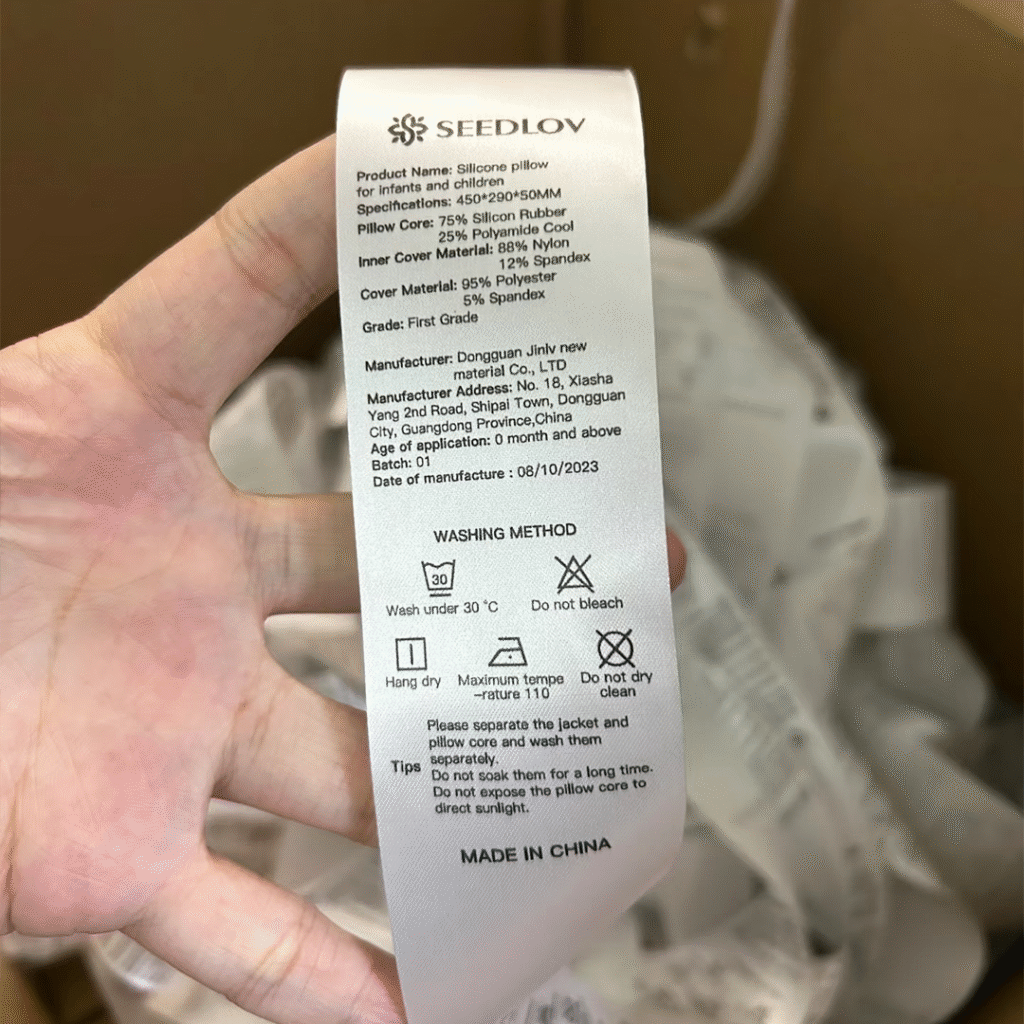
Using the Wrong Ink (It Bleeds Onto Garments)
Cheap ink on wash care labels bleeds when wet—staining light-colored clothes like white t-shirts or ivory blouses. A men’s white shirt brand learned this the hard way: Their labels used water-based ink that turned white collars light blue after one wash.
They switched to “wash-resistant pigment ink” for their Wash Care Label. “The ink stays on the label, not the shirt,” the owner said. “We haven’t had a staining complaint since.”
Fix: Ask suppliers for “garment-safe, bleed-proof ink.” Test it: Rub a wet cloth on the label—if ink transfers, pick a different ink.
Vague Instructions (“Wash as Needed” Isn’t Helpful)
“Wash as needed” or “Handle with care” tells customers nothing. A kids’ brand used this vague line on their Care Instruction Label for cotton onesies—parents washed them in hot water (thinking it was “cleaner”), and the onesies shrank 2 sizes.
They now write: “Machine wash cold. Tumble dry low. Do not bleach.” “Parents follow specific steps—no more shrinkage,” the owner said.
Fix: Be exact. Include water temp (cold/warm/hot), drying method (tumble dry/lay flat), and bleach rules.
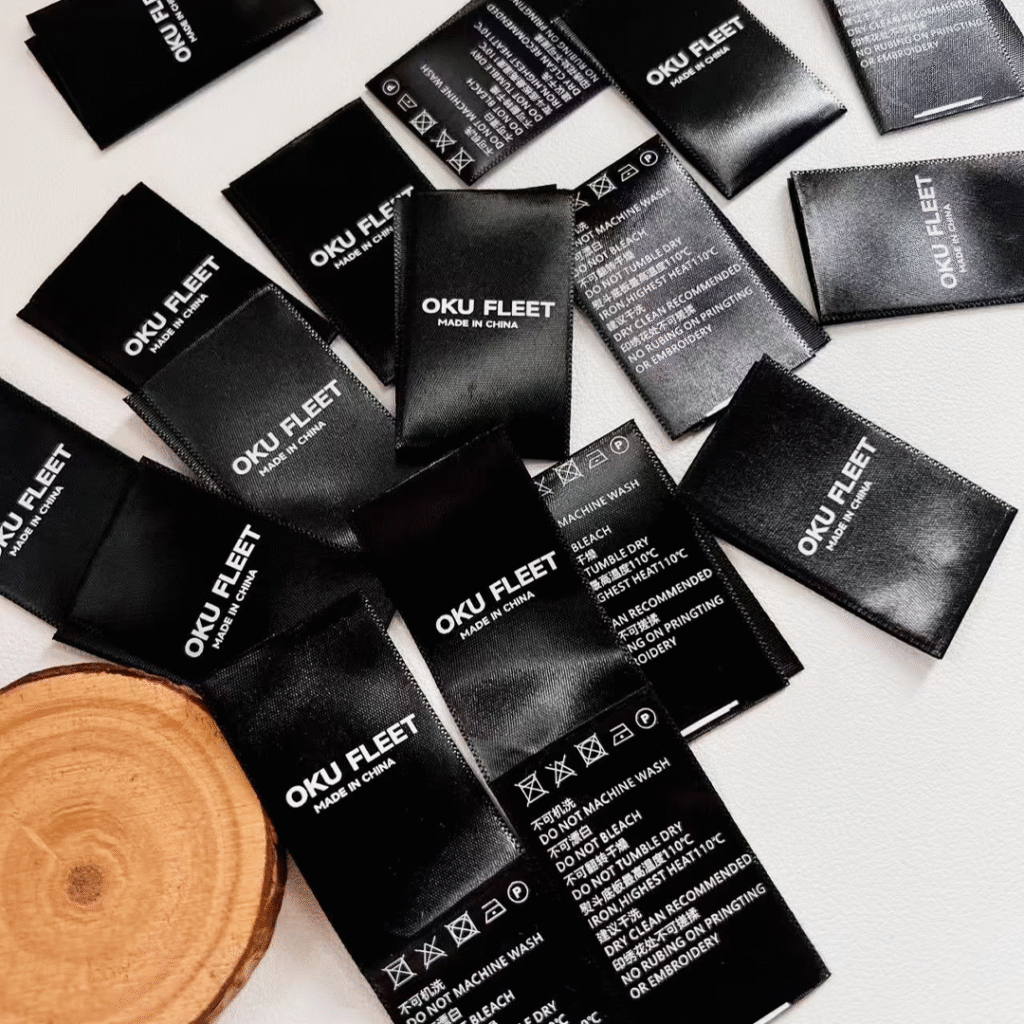
Forgetting Fabric Blends (e.g., “100% Cotton” When It’s a Blend)
If a garment is 80% cotton/20% polyester, label it that way—don’t lie and say “100% cotton.” A loungewear brand did this, and customers washed the blend like pure cotton (hot water, high heat)—it shrank and pilled.
They updated their Wash Care Label to list the exact blend: “80% cotton/20% polyester. Wash cold. Tumble dry low.” “Customers now know it’s a blend—and wash it right,” the manager said.
Fix: Test your fabric (or ask your supplier) for the exact blend, then list it on the garment label.
Ignoring Special Details (e.g., Lace or Embroidery)
Garments with lace, embroidery, or beading need extra care—but many labels skip this. A bridal brand’s Care Instruction Label said “dry clean only” for lace dresses, but didn’t mention “do not steam lace” (steaming melts delicate lace). Brides ruined 7 dresses before the brand added the note.
Fix: Add a line for special details: “Dry clean only. Do not steam lace.”
Using Too-Small Text (No One Can Read It)
Tiny text (under 8pt) on wash care labels is useless—customers can’t read it, so they guess. A senior-focused brand made this mistake: Their labels had 6pt text, and older customers washed sweaters in hot water (they couldn’t read “wash cold”).
They upsized to 10pt bold text. “Now everyone can read it,” the owner said.
Fix: Use at least 8pt text—10pt bold is better for readability.
Copying Generic Labels (They Don’t Fit Your Fabric)
Sarah’s silk dress mistake? Copying a cotton dress brand’s garment label. Silk needs “hand wash cold” or “dry clean only”—not “machine wash cold.”
She now creates custom Care Instruction Label for each fabric: Silk dresses say “Dry clean only.” Cotton blouses say “Machine wash cold.” “No more one-size-fits-all labels,” she said.
Fix: Don’t copy—tailor labels to your specific fabric (silk vs. cotton vs. polyester).
How to Test Your Wash Care Label (3 Simple Steps)
1:Print a sample label and attach it to a scrap of your garment.
2:Wash/dry the scrap using the label’s instructions.
3:Check for ink bleeding, label damage, or scrap shrinkage. If any happen, fix the label.
Wrapping Up
Sarah now spends 10 extra minutes on each Wash Care garment label—and her return rate dropped by 40%. “A good label is like a teacher for customers,” she said. “It shows you care about their garment lasting.”
The best wash care labels are specific, honest, and easy to read. Whether you’re making a Wash Care Label for cotton t-shirts or a Care Instruction Label for silk dresses, avoid these 6 mistakes. Your customers (and your brand’s trust) will thank you.
Need Expert Guidance?
ANG specializes in custom packaging for global fashion brands. Contact us for a free consultation Design and Samples.
 English