
Raj, who runs a 3-store retail chain, used to rotate between wood hanger materials—pine for budget, beech for “nice” items—until he crunched the numbers. “In 2 years, I spent $4,000 replacing pine hangers that cracked, and $2,000 on beech that still looked new,” he said. “I thought pine was cheaper, but it cost double in the long run. Now I need to figure out if lotus wood is worth the hype.”
For retail stores, choosing wooden hangers isn’t just about “looks”—it’s about durability (how long they last) and total cost (upfront + replacements). Beech, lotus wood, and pine are the most common options, but their lifespans and price tags tell very different stories. Below’s a side-by-side breakdown, with real retailer math and stories—plus where Lotus wood hanger, Beech Wood Hangers, and Pine Hangers fit in.
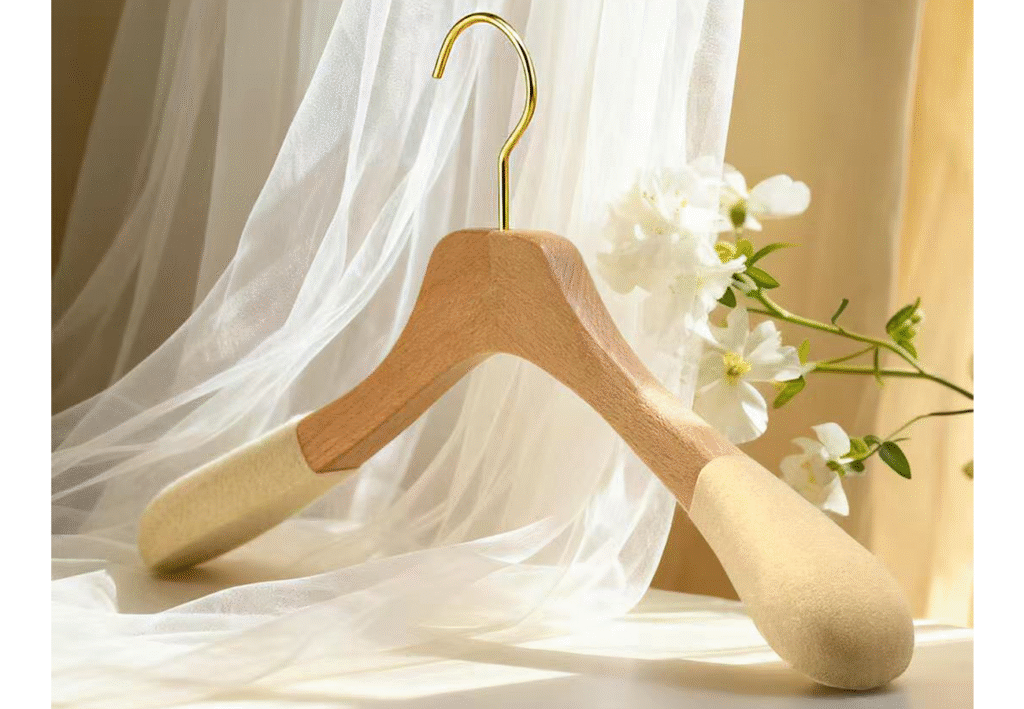
Pine Wood Hanger: Low Upfront Cost, High Long-Term Bills
Pine is the cheapest wood hanger material—usually $1–$2 per unit. It’s soft, light, and easy to mass-produce, which is why budget retailers often start with it. But softness comes with a catch: pine dents, warps, and cracks easily, especially under heavy clothes like coats or denim.
Maria, a fast-fashion store owner, switched from pine after 18 months: “We bought 10,000 Pine Hangers for $10,000. By month 6, 30% were cracked—shoulders split under winter coats. By month 12, we’d replaced 5,000 more, adding $5,000. Total cost: $15,000 for 10,000 hangers that barely lasted a year. That’s $1.50 per hanger, not $1.”
Pine also struggles with humidity. In stores with AC fluctuations, pine hangers absorb moisture, warp, and leave shoulder dents on dresses. “I had to discount 20% of my summer dresses because of pine hanger dents,” Maria said. “That’s $8,000 in lost sales—way more than the hanger cost.”
Best for: Stores with ultra-low budgets, lightweight clothes (t-shirts, tank tops), and frequent hanger replacements planned.
Lifespan: 6–12 months (heavy use); 1–2 years (light use).
Beech Wood Hanger: The “Workhorse” for Mid-to-High-End Stores
Beech is a hard, dense wood—pricier upfront ($3–$5 per hanger) but built to last. It resists warping, cracks, and dents, even under heavy items like wool suits or layered jackets. For stores with mixed clothing types, beech balances durability and cost.
Raj uses Beech Wood Hanger in his men’s section: “I bought 5,000 beech hangers 3 years ago for $20,000. To date, I’ve replaced 300—mostly from staff dropping them. Total cost: $21,200 for 5,300 hangers, or $4 per hanger over 3 years. Pine would’ve cost me $30,000+ in that time.”
Beech also holds up in humid environments. A boutique in Miami (90% humidity) reported zero warping in 2 years: “Our pine hangers turned into ‘bananas’ from moisture, but beech stayed straight. No more dented silk blouses—returns dropped 15%.”
Best for: Stores with heavy clothes (coats, suits), humid climates, and 3+ year hanger lifespans.
Lifespan: 5–7 years (heavy use); 7–10 years (light use).
Lotus Wood Hanger: Premium Durability for Luxury Stores
Lotus wood is a step up from beech—even denser, naturally water-resistant, and with a rich, dark grain that looks high-end. It’s the priciest option at $6 to $8 per hanger, but it’s unbeatable for luxury stores that sell high-value items like cashmere coats or designer dresses.
Elena, who owns a luxury womenswear boutique, switched to Lotus wood hanger after trying beech: “My $500 cashmere coats need hangers that won’t stretch the shoulders. Lotus wood is stiffer than beech—no sagging, no dents. I bought 2,000 four years ago for $14,000, and I’ve only replaced 50. Total cost: $16,400. If I’d used beech, I would’ve needed 300 replacements by now, totaling $14,000—close in cost, but the lotus protects my inventory better.”
Lotus also boosts brand perception. “Customers notice the hangers,” Elena said. “They’ll comment on how the wood matches our store’s vibe—it makes the dresses feel even more luxurious. That small detail keeps people coming back.”
Best for: Luxury stores, high-value clothes (cashmere, leather, designer pieces), and brands that prioritize long-term quality over upfront cost.
Lifespan: 8 to 10 years for heavy use; 10+ years for light use.
The Math: Which Material Saves You Money?
Let’s break down the cost of 1,000 hangers over 5 years—this is a typical number for a single section in a small-to-mid store:
– Pine: Upfront cost is $1,000. But since pine only lasts 6–12 months, you’ll need to buy 4,000 more hangers over 5 years (1,000 each year). Total 5-year cost: $5,000, or $1,000 per year.
– Beech: Upfront cost is $4,000. You’ll only need 100 replacements over 5 years (most from accidents, not wear). Total 5-year cost: $4,400, or $880 per year.
– Lotus wood: Upfront cost is $7,000. Replacements are rare—maybe 50 over 5 years. Total 5-year cost: $7,350, or $1,470 per year.
The big takeaway? Pine is cheapest on day one, but it costs the most over time. Beech saves most stores money after 5 years. Lotus is only worth it if you sell luxury items—otherwise, it’s overspending.
3 Tips to Pick the Right Material for Your Store
Match the hanger to your clothes: If you sell heavy items (coats, wooden Suit Hangers for formalwear), skip pine—go for beech or lotus. If you only sell lightweight tees, pine works (but set aside budget for yearly replacements).
Calculate “cost per year”: Don’t just look at upfront price. Divide the total 5-year cost by 5—for 1,000 hangers, beech’s $880 per year beats pine’s $1,000 easily.
Test samples first: Grab one pine, one beech, and one lotus hanger. Hang a heavy coat on each and leave it for a month. Pine will warp; beech and lotus will stay straight. That visual difference tells you everything you need to know.
Wrapping Up
Raj now uses beech for 80% of his stores: “I used to think cheap hangers were a win, but they cost me time and money. Beech doesn’t need replacing, it doesn’t ruin my clothes, and it’s cheaper in the long run. It’s a no-brainer.”
Choosing between beech, lotus wood, and pine comes down to your store’s needs: if you’re on a tight budget and sell light clothes, pine works (temporarily). If you want to save money over time, beech is the way to go. If you sell luxury items, lotus protects your inventory and elevates your brand.
Next time you order hangers, don’t just check the price tag—check how long they’ll last. Your bottom line (and your inventory) will thank you.
Need Expert Guidance?
ANG specializes in custom hangers for global fashion brands. Contact us for quotation and sample.
 English